All right, I have some news: I am no longer going to baking school. After much debate I officially withdrew last week. To be completely vague, it just didn't feel right at this point in my life. One of the nagging, recurring thoughts during my weeks-long deliberation: You started a blog about going to baking school! What now?
Well, it's really not too difficult: I keep baking. My goal to be a baker remains intact, and so will this blog. My latest undertaking? Yeast bread.
I received Bernard Clayton's New Complete Book of Breads as a Christmas gift a few years ago, and have only now found myself rich with the time and brain space it takes to start learning bread - from scratch. I read the introduction about Bernard's take on bread baking; I read through the ingredients and their functions; I read about equipment, leavening agents, kneading and rising. Then I had my pick of hundreds of recipes. Where would I begin my foray with bread? B.C. contributes his own suggestion for the first loaf, but I wasn't having it. I skimmed the table of contents and found the winner under French and Italian Breads: Pain Ordinaire Careme it would be.
The series began with stirring the flour, yeast, and hot water together, a movement all too familiar. Then I added more flour and the batter became dough; it was time to ditch the whisk and acquaint my hands with the tactual world of kneading. Why, there's nothing quite like working with bread dough. It's soft and giving, but it won't yield completely. Mere seconds into the push-turn-fold, push-turn-fold of kneading, the dough begins to push back, reminding me that I'm not the only force at work here. There's a presence in the dough, and it's got a small agenda of its own; whether or not it aligns with my plan is left at the mercy of a few controllable factors and a few uncontrollable ones, too. I lack the erudition required to explore those things you can attempt to control, but I can leave you with a suggested frame of mind for baking bread: don't let the active, dominating motions of kneading fool you; the transformation dough goes through to become bread is its own - you're just there to lend a hand.
Tuesday, January 25, 2011
Thursday, January 20, 2011
Potato Appreciation
It's the dead of winter and the temperature in Minneapolis is refusing to wander far from zero. Last week the combination of the cold and my current status as an unemployed non-student hit me hard. I needed something to do, and I needed some comfort food.
Enter the potato. An objective glance at your basic russets couldn't possibly elicit much love; there's nothing cute or charming about them. But love 'em we do: potatoes never fail to fill us up with starchy warmth; they provide a blank canvas for other foods and flavors; and they stick by us through the bitter months.
So I consulted my Simply in Season cookbook, a beautiful compilation of recipes that feature farmers market vegetables and the seasons in which they are available. I found two potato recipes composed of the same basic ingredients, so I took to the store for carrots, green onions, and lots of potatoes.
Potato Soup
Sauteed half a cup of green onion in 2 tbsp butter in a large saucepan, then added 2 cups of vegetable stock, about 3 cups of diced potatoes and a half a cup of shredded carrots; sprinkled in some salt, pepper, and dried dill; then covered and cooked for 15-20 minutes.
I wanted a creamy soup, so when the potatoes were tender I ladled most of the mixture into a blender and pureed it before returning it to the saucepan. Then I added a mixture of 2 cups milk and 3 tbsp flour (whisked together before adding) and continued to cook and stir until the soup had thickened a bit. And that's that. The shredded carrots and green onions gave the soup beautiful color and mitigated the starchiness of a soup full of russets, but make no mistake: I knew I was eating potatoes.
Dilly Mashed Potatoes
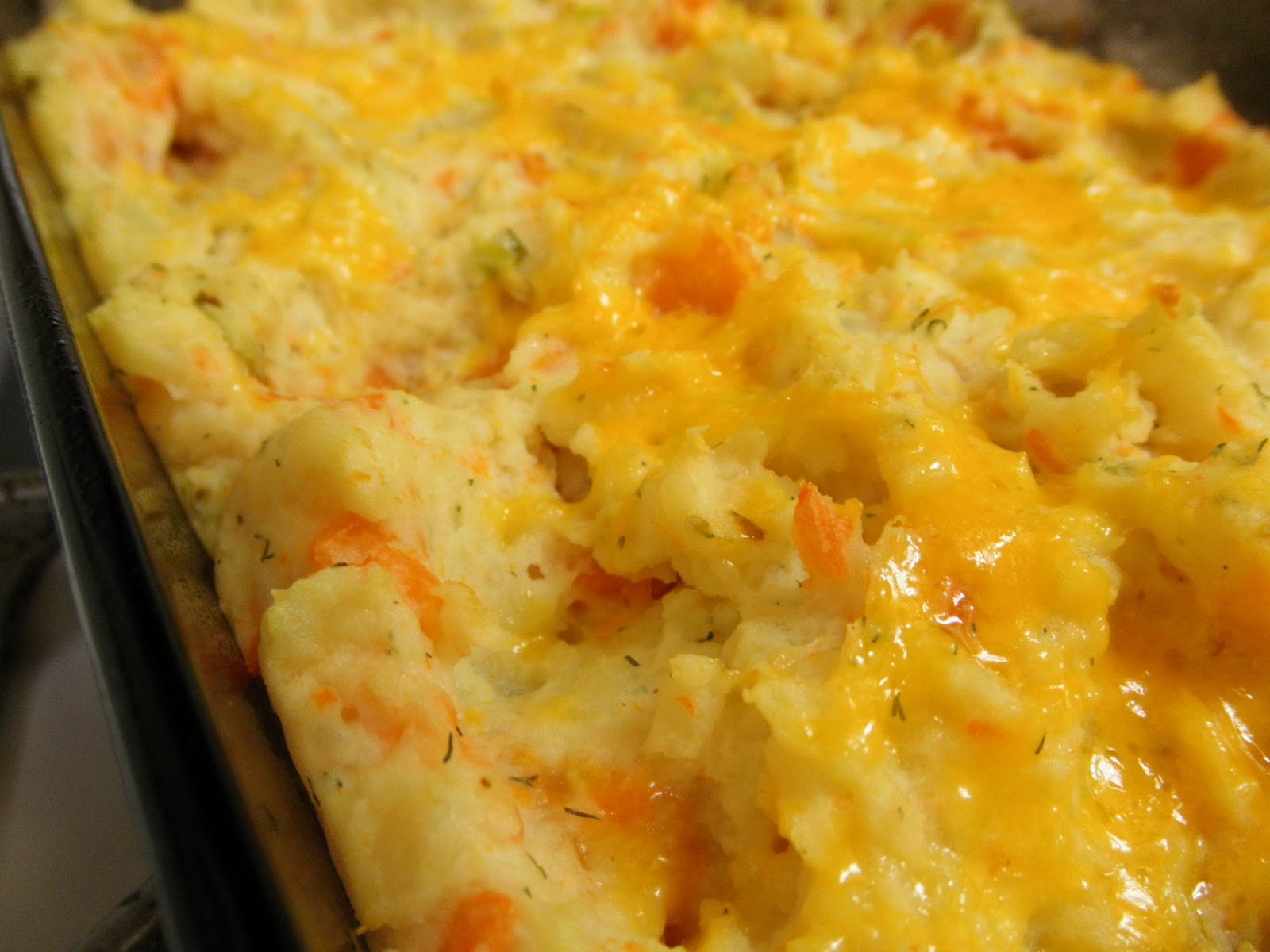
Combined 3 large russets (cubed) and 4 large carrots (thinly sliced) and boiled together until soft. Sauteed a fourth a cup of green onions in 2 tbsp butter and threw in 1 tsp dried dill (are these ingredient looking familiar?). Drained and mashed the potatoes and carrots, then added the onion. Stirred in a half cup of plain yogurt and a bit of salt and pepper, then plopped it all into a greased casserole dish. Topped with shredded cheddar and baked at 350F for 30 minutes.
I suppose I'm also applauding carrots and green onions with these dishes, as they would be a couple of beige flops without the orange and green furnishings. But the star of the show and taker of the cake is our most beloved winter tuber that deserves main dish status every once in a while. Potato: consider yourself honored.
Enter the potato. An objective glance at your basic russets couldn't possibly elicit much love; there's nothing cute or charming about them. But love 'em we do: potatoes never fail to fill us up with starchy warmth; they provide a blank canvas for other foods and flavors; and they stick by us through the bitter months.
So I consulted my Simply in Season cookbook, a beautiful compilation of recipes that feature farmers market vegetables and the seasons in which they are available. I found two potato recipes composed of the same basic ingredients, so I took to the store for carrots, green onions, and lots of potatoes.
Potato Soup
Sauteed half a cup of green onion in 2 tbsp butter in a large saucepan, then added 2 cups of vegetable stock, about 3 cups of diced potatoes and a half a cup of shredded carrots; sprinkled in some salt, pepper, and dried dill; then covered and cooked for 15-20 minutes.
Combined 3 large russets (cubed) and 4 large carrots (thinly sliced) and boiled together until soft. Sauteed a fourth a cup of green onions in 2 tbsp butter and threw in 1 tsp dried dill (are these ingredient looking familiar?). Drained and mashed the potatoes and carrots, then added the onion. Stirred in a half cup of plain yogurt and a bit of salt and pepper, then plopped it all into a greased casserole dish. Topped with shredded cheddar and baked at 350F for 30 minutes.
Thursday, January 6, 2011
Lemon, Parsley & Pears
And butter. So much butter.
Last week my boyfriend and I were tucking into lemon pepper chicken with sweet red peppers and asparagus when I realized that he has cooked me dinner several times now (that was one of them) and I have cooked him dinner zero times. In my quick defense, I did make him a kick-ass chocolate peanut butter cake for his birthday, but come on - I've never made someone dinner before? Well now, I had to do something about that.
So I looked through cookbooks, browsed recipes online...and came up with what I thought was a simple, light menu. For dinner it would be pasta with parsley and parmesan. Before I go any further, I should mention Megan's fun food lesson of the week: there are two types of parsley. Flat leaf parsley, also known as Italian parsley, seems to be ideal in most situations. It's bolder, as they say. Unfortunately, I saved my parsley research for after I got back from the grocery store with curly leaf parsley. And I was going to use it anyway - bold schmold - but a lack of lemons found me back at the store where I ran into flat leaf parsley for 99 cents. So, there we go.
Dinner
Cooked spaghetti and tossed it with - brace yourself - just short of a stick and a half of unsalted butter, chopped parsley, parmesan cheese, fresh lemon juice, and a bit of garlic salt.
Holy butter! I had a hard time melting 12 tablespoons of butter, but one pound of spaghetti is a LOT, and butter melts down quite a bit. In the end, the parsley and lemon shone through, making the pasta light and fresh with little bursts of the sharp parmesan. Though the butter refused any of the spotlight in the pasta, it greeted us when we reached the bottom of our plates, reminding us that there was indeed some fat in this thing.
Dessert
Halved and peeled Bosc pears and arranged them cut side up in a baking dish. Drizzled with lemon juice and sprinkled with vanilla sugar (I mixed 1 tsp vanilla extract with 1/4 c sugar, but I could've used a bit more vanilla). Dotted with butter and put a couple tablespoons of water in the bottom of the pan before putting it in a 375 degree oven. Roasted for 30 minutes, turned the pears, then roasted for another 15-20 minutes. We topped our pears with vanilla ice cream and drizzled the juice from the bottom of the pan over the ice cream. Oh my.
Lying in bed that night, I could feel my body's confusion as it tried to make sense of all the butter I'd just consumed. I could feel it asking, What am I supposed to do with all of this? If you'd like to know what this is like, simply incorporate 1.5 sticks of butter into your evening meal. And you know what goes really well with butter? Lemon, parsley and pears.
Last week my boyfriend and I were tucking into lemon pepper chicken with sweet red peppers and asparagus when I realized that he has cooked me dinner several times now (that was one of them) and I have cooked him dinner zero times. In my quick defense, I did make him a kick-ass chocolate peanut butter cake for his birthday, but come on - I've never made someone dinner before? Well now, I had to do something about that.
So I looked through cookbooks, browsed recipes online...and came up with what I thought was a simple, light menu. For dinner it would be pasta with parsley and parmesan. Before I go any further, I should mention Megan's fun food lesson of the week: there are two types of parsley. Flat leaf parsley, also known as Italian parsley, seems to be ideal in most situations. It's bolder, as they say. Unfortunately, I saved my parsley research for after I got back from the grocery store with curly leaf parsley. And I was going to use it anyway - bold schmold - but a lack of lemons found me back at the store where I ran into flat leaf parsley for 99 cents. So, there we go.
Dinner
Cooked spaghetti and tossed it with - brace yourself - just short of a stick and a half of unsalted butter, chopped parsley, parmesan cheese, fresh lemon juice, and a bit of garlic salt.
Holy butter! I had a hard time melting 12 tablespoons of butter, but one pound of spaghetti is a LOT, and butter melts down quite a bit. In the end, the parsley and lemon shone through, making the pasta light and fresh with little bursts of the sharp parmesan. Though the butter refused any of the spotlight in the pasta, it greeted us when we reached the bottom of our plates, reminding us that there was indeed some fat in this thing.
Dessert
Halved and peeled Bosc pears and arranged them cut side up in a baking dish. Drizzled with lemon juice and sprinkled with vanilla sugar (I mixed 1 tsp vanilla extract with 1/4 c sugar, but I could've used a bit more vanilla). Dotted with butter and put a couple tablespoons of water in the bottom of the pan before putting it in a 375 degree oven. Roasted for 30 minutes, turned the pears, then roasted for another 15-20 minutes. We topped our pears with vanilla ice cream and drizzled the juice from the bottom of the pan over the ice cream. Oh my.
Lying in bed that night, I could feel my body's confusion as it tried to make sense of all the butter I'd just consumed. I could feel it asking, What am I supposed to do with all of this? If you'd like to know what this is like, simply incorporate 1.5 sticks of butter into your evening meal. And you know what goes really well with butter? Lemon, parsley and pears.
Thursday, December 30, 2010
Butternut Bliss
This fall I went to a dinner party hosted by my friend and her sister. We enjoyed an array of seasonal comfort foods, but I swooned most over the butternut squash and caramelized onion galette. I was thrilled to learn of a new way to eat the beautiful fall squash. They found the recipe at smittenkitchen.com, where recipes are sorted by season.
I finally got around to making it on Christmas Eve. I prepared for a longer process than was necessary; there are quite a few steps, but they're all pretty simple: make the dough, roast the squash, caramelize the onions - and you can do it all at roughly the same time. I was baffled, though, when the first step asked me to put the flour and salt in one bowl and butter in another, then put both bowls in the freezer for an hour. Apparently, when making pie crusts, you want the ingredients to be as cold as possible. I would guess this fact is widely known but often ignored. Anyway, after the dough and filling are made and the galette assembled, it's a relaxing 40 minutes between this:
and this:
And I daresay it tastes even better than it looks (and that's a bold claim - do you see the individual bits of squash and caramelized onion?!) Needless to say, this savory little tart was a popular dish Christmas Eve. So thanks to smittenkitchen for providing the recipe, thanks to the Schnobrichs for introducing me, and biggest thanks to the reason we're all here:
Wednesday, December 29, 2010
Ode to Cinnamon & Sugar
Are you familiar with the simplest, most delectable cinnamon rolls in the world? That's my own claim, but I don't see how anyone could argue. We made these on Christmas morning and were so impressed that we did it again a couple days later. We used Rhode's sweet dough, which obviously plays a huge role in the simplicity factor. Before you go to bed the night before, set the frozen dough out in a pan covered with cling wrap, and be sure to grease the underside of the cling wrap so the dough doesn't stick to it when it rises. In the morning it'll be ready to pull apart into golf ball-size (or slightly bigger) chunks. Dip those in melted butter, then roll them in a sugar/cinnamon mix. Be generous! - the coating thins out as the rolls get bigger in the second rising. When everything's coated, cover the pan with the greased cling wrap once again and put it in front of a fire (or a sunny spot on the counter) for about 45 minutes - 1 hr, allowing the rolls to double in size. They'll be pretty cozy inside the pan, but this is just how you want them. Bake at 350F for about 12-15 minutes. The result:
When my mom and I made them today, we were positively floored by the underbelly of the rolls. I can only hope that others appreciate the beauty as much as we did:
Especially when baked in such close quarters, the rolls achieve the perfect balance: incredibly light in the middle, soft and sticky on the sides, and the most delicate crunch on the top and bottom. There is no need for icing here, lest you compromise the gorgeous simplicty of butter, cinnamon and sugar.
When my mom and I made them today, we were positively floored by the underbelly of the rolls. I can only hope that others appreciate the beauty as much as we did:
Especially when baked in such close quarters, the rolls achieve the perfect balance: incredibly light in the middle, soft and sticky on the sides, and the most delicate crunch on the top and bottom. There is no need for icing here, lest you compromise the gorgeous simplicty of butter, cinnamon and sugar.
Subscribe to:
Posts (Atom)